
心理追凶
机圈史上最激烈9月!华米苹三大折叠正面交锋 旗舰新机扎堆_我的网站

一 |
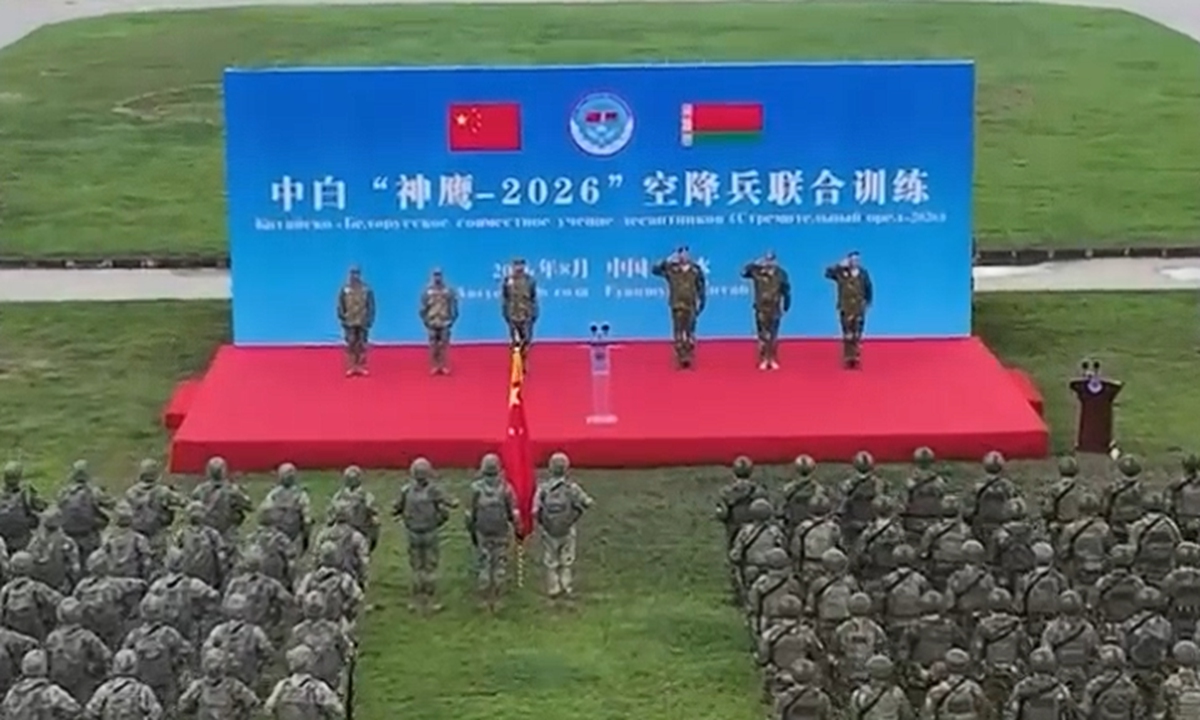
Focusing on "joint counter-terrorism operations in urban terrain," the training will focus on subjects such as surveillance and counter-surveillance, seizure-and-control and protection, and elimination and defense, Xinhua reported.
In addition, the two sides will organize seminars, friendly football matches and cultural exchange activities during the joint training, said the report.
As the fourth iteration, the joint training will help enhance the combat capabilities of the participating troops and deepen substantive cooperation between the two militaries, said Xinhua.
While details on the equipment deployed by both sides have not yet been disclosed, Wang Yanan, editor-in-chief of Beijing-based Aerospace Knowledge magazine, told the Global Times on Thursday that Belarus is likely to follow its traditional practices, focusing on low-altitude small-scale airborne operations, possibly using Il-76 large transport aircraft, while China may deploy Y-9 or Y-20 transport aircraft for low-altitude delivery.
The joint training is not a one-way learning exercise, but rather a process of building a cooperative foundation and familiarizing both sides with each other's operational habits in the counter-terrorism domain, Wang said.
While China has made significant progress in counter-terrorism and maintaining stability in recent years, the expert said, airborne troops have been rarely used in counter-terrorism operations, as local police and armed police forces are generally sufficient to handle such situations.
Airborne troops are better suited for special counter-terrorism scenarios, such as large-scale counter-terrorism operations or cases where terrorists have occupied urban building complexes and need to be forcibly removed. This joint training likely simulates such scenarios, Wang said.
The previous iteration of the Swift Eagle series airborne joint counter-terrorism training between China and Belarus took place in 2015.
In June 2015, a PLA Air Force spokesperson announced that China had dispatched an airborne special operations detachment to Belarus to participate in the Swift Eagle 2015 joint counter-terrorism training.
According to China Military Online, the training followed the 2011 and 2012 joint exercises between the two countries' airborne forces, again focusing on joint counter-terrorism operations.
The spokesperson noted that Belarus is a traditional friendly country to China.
Conducting joint airborne training with Belarus helps consolidate traditional bilateral friendship, deepen practical exchanges and cooperation between the two militaries, and enrich the content of the comprehensive strategic partnership between the two countries.
Wang noted that Belarus, located to China's west, and China share a common long-term interest in discussing counter-terrorism.
After a hiatus of several years, the resumption of the Swift Eagle joint training provides an opportunity to promote in-depth cooperation in defense and mutual trust, serving as a point of common interest for both sides.
Wang noted that the PLA's domestic training exercises have undergone profound changes in recent years.
For example, the documentary series Zhìshèng (Victory) broadcast in early August, showed training conducted with a no-script model, with both sides engaging in free-form confrontations and evaluating results based on actual combat performance, promoting the integration of personnel and equipment systems to generate new operational capabilities. This model has already produced notable results.
More broadly, Wang said, recent joint exercises between the PLA Air Force and foreign militaries have yielded multiple benefits, primarily on two levels.
First, they lay the groundwork for potential future joint operations, whether in counter-terrorism, maintaining stability or major international security issues, as mutual familiarity is essential for effective cooperation.
Second, joint exercises themselves contribute to regional stability. When friendly countries in the region reach consensus on security issues and conduct regular military cooperation, it has a stabilizing effect on regional security.
Overall, the PLA is building a more open and flexible military cooperation framework through both enhanced domestic combat-oriented training and expanded international joint exercises, Wang said.
。 8月25日消息,今年9月或将成为近年来手机行业新品最密集的一个月,多款新形态折叠屏、全新旗舰芯片以及新一代旗舰手机都将在这一时间段集中登场。

二 | 今日,数码博主“数码闲聊站”发文称,9月或许是机圈史上最激烈的新品月,高端折叠、旗舰芯片以及旗舰手机三条产品线都将迎来大规模更新。 首先是高端折叠屏市场。 按照爆料,9月将迎来华为新一代三折叠、小米首款阔折叠以及苹果首款阔折叠产品,三大厂商将在高端折叠屏市场展开正面竞争。
其中,华为已经官宣Mate XT 2将于9月7日发布,新一代三折叠手机届时正式登场。 小米方面,小米CEO雷军此前宣布9月将成为小米“科技大月”,月初澎程系列正式上市,同时带来小米18 Fold,月底则将发布小米18 Pro系列。 芯片领域同样堪称“神仙打架”。 9月手机市场预计将迎来小米玄戒O3、苹果A20系列、联发科天玑9600系列、高通骁龙8E6系列以及华为麒麟2026τ芯片,多家厂商的新一代旗舰芯片将集中亮相。

三 | 其中,小米玄戒O3已率先发布,定位AI旗舰SoC,安兔兔跑分首次突破500万,其首发终端为小米18 Fold。 而在传统直板旗舰产品线上,9月同样会迎来一轮“机海战术”。 根据目前消息,iPhone 18系列、vivo X500系列、OPPO Find X10系列、华为Mate 90系列、小米18系列、荣耀Magic9系列以及iQOO 16等新一代旗舰都有望在9月集中登场。

四 | vivo方面已确认,X500系列将在9月正式发布,并将推出X500、X500 Pro、X500 Pro Max三款机型。 从目前各家厂商的产品节奏来看,今年9月不仅旗舰手机数量众多,还叠加了折叠屏形态之争和新一代旗舰芯片集中换代。 苹果、华为、小米、OPPO、vivo、荣耀、iQOO等主流厂商都将参与其中,手机行业也将提前进入新一轮旗舰大战。

五 |
Current article:http://jrje14s.zongchaeiwengshuabaisisuofu.sbs/news/20260826_8705.html
Published on:06:00:37
 Steam在线模拟游戏“智能手机大亨”:自制手机
 我硕士毕业,在英国当保安,这里当保安也要持证上岗,门槛并不低
 NZ's new plan to protect Hector's dolphins
 沙特记者:C罗对短暂转会利雅得新月并参加世俱杯很感兴趣
 小米 REDMI 17C 5G 手机海外发布:天玑 6300 芯片,279 新加坡元
 重磅开播!首期《食安中国》8月22日20:00上线